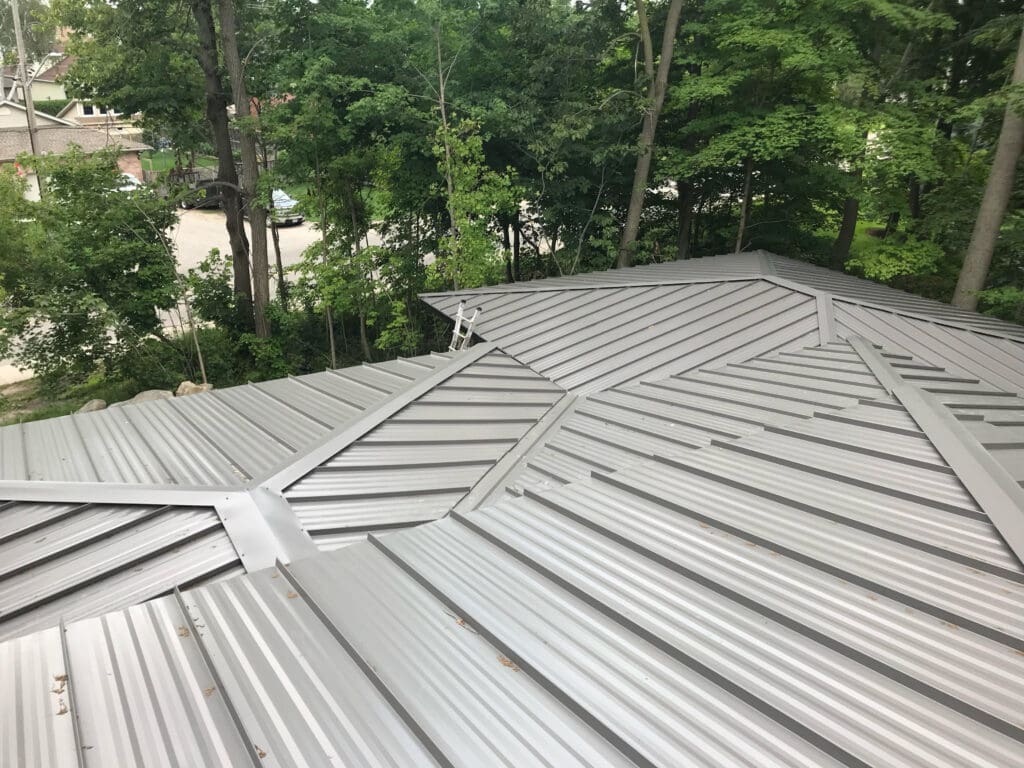
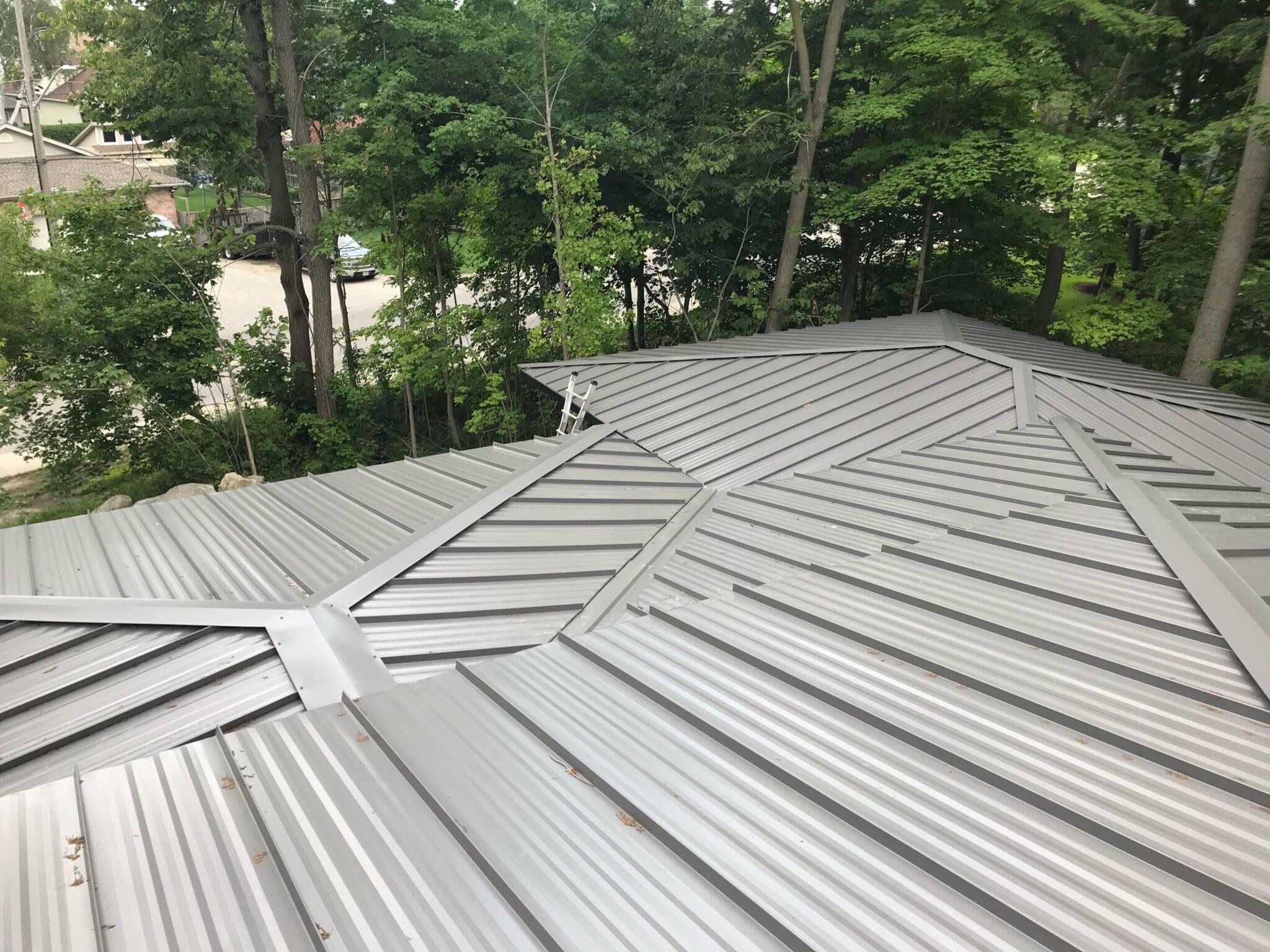
A metal roof maintenance schedule requires regular semi-annual inspections each spring and fall, as well as checks after major storms. AWC Metal Roofing recommends checking for debris, loose fasteners, and sealant integrity. Properly installed standing seam systems need minimal upkeep, but regular care prevents small issues from becoming costly repairs.
Why follow a metal roof maintenance schedule?
A metal roof maintenance schedule protects a 40 to 70 year investment. Skipping routine care shortens that lifespan and invites preventable damage.
Ontario’s climate punishes neglected roofs. Freeze-thaw cycles, heavy snow loads, and summer storms stress panels, fasteners, and flashing. AWC Metal Roofing designs its standing seam and Tuff Rib systems for these conditions. Even the toughest metal roof needs attention. Without a roof inspection schedule, small issues grow into costly failures. A backed-out screw lets water in. A clogged valley traps moisture against the metal. These problems stay hidden until a leak appears inside.
A structured maintenance plan metal roof owners follow also preserves warranty coverage. Many manufacturer warranties require documented care. Skipping inspections risks voiding that protection. The loss is twofold: a shorter roof life and no financial backstop.
What does a preventative roof service include?
A preventative roof service catches problems before they escalate. Trained crews inspect seams, flashings, and fasteners. They clear debris from valleys and gutters. On exposed-fastener panels, they reseat any screws that have backed out. They touch up scratches in the paint finish to prevent corrosion. This proactive work keeps the roof performing through every season.
How often should a metal roof be inspected?
Twice a year works for most Ontario properties. A spring inspection addresses winter’s toll. A fall check prepares the roof for snow and ice. Metal Roof Maintenance: A Simple Yearly Checklist confirms that a quick check once or twice a year helps a metal roof hit its full 40 to 70 year lifespan. Properties surrounded by trees may need additional visits. Falling branches and pine needles demand more frequent clearing.
AWC Metal Roofing builds roofs for the long haul. A long term roof care routine turns that engineering into decades of reliable performance. The company’s metal roof maintenance program delivers scheduled inspections, cleaning, and minor repairs. Property owners who commit to that rhythm avoid emergency calls. They also sidestep the expense of premature replacement. For a deeper look at how metal outperforms other materials, explore the metal roofing benefits and options that make this maintenance investment worthwhile.
What’s your seasonal roof inspection schedule?
A seasonal roof inspection schedule protects a metal roof’s 40 to 70 year lifespan. Twice-yearly checks catch small issues before they become expensive failures.
A disciplined maintenance plan metal roof strategy follows nature’s calendar. Spring and fall inspections form the backbone of effective long term roof care, according to Central States Co.’s essential maintenance guide. Each season presents distinct challenges that demand specific attention.
What should a fall roof inspection include?
Fall preparation prevents winter water damage. The priority is clearing gutters and valleys so melting snow drains freely. Homeowners also check seals around vents and chimneys, since freezing water expands and widens tiny gaps into major leaks. AWC Metal Roofing’s crews see this pattern every year: neglected fall maintenance leads to preventable spring repairs.
How does winter weather affect metal roof fasteners?
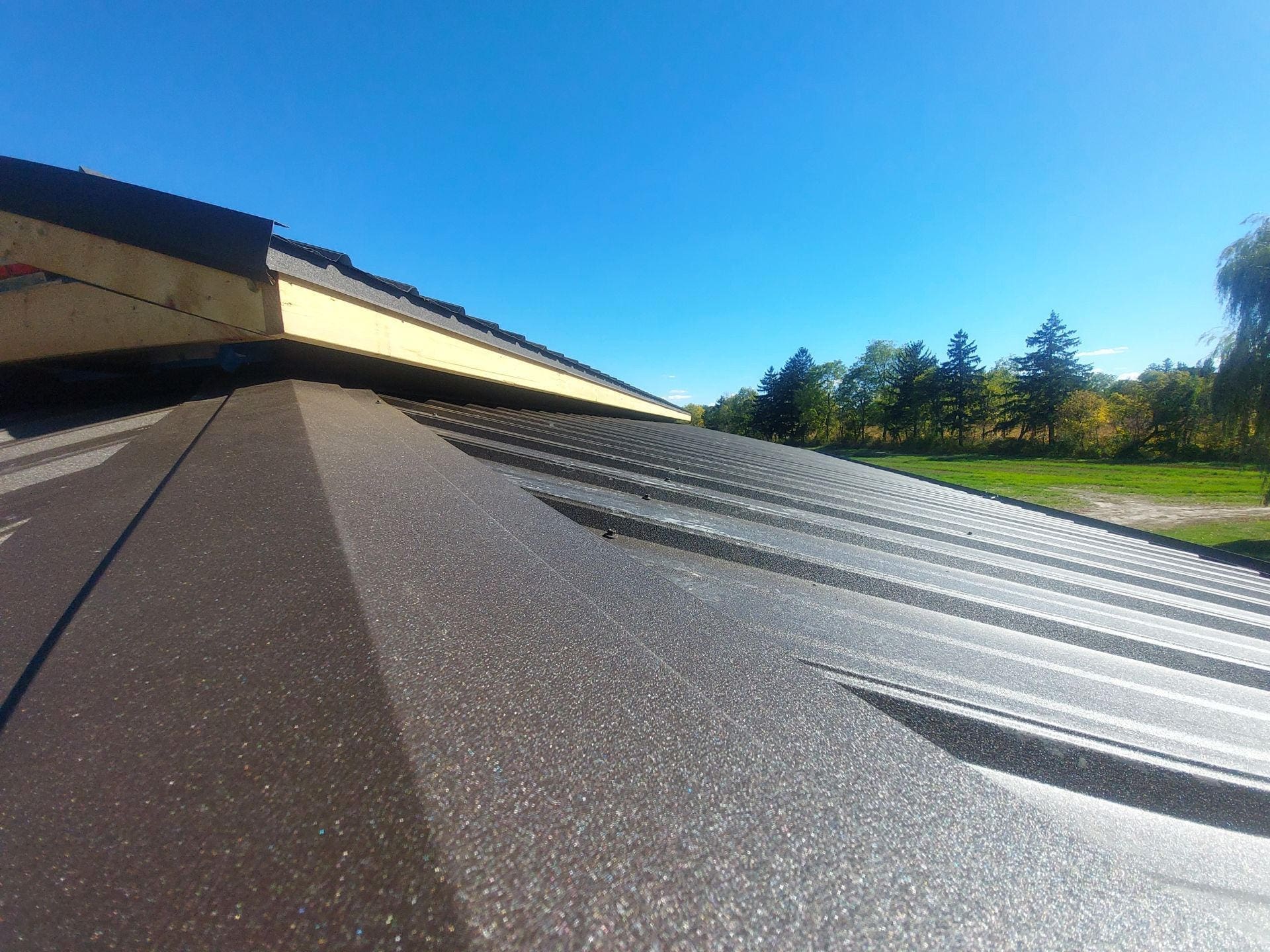
Freeze-thaw cycles work screws loose. Post-winter inspections focus on trim, ridge caps, and flashing for anything that shifted during cold months. Exposed fastener roofs need particular attention. Backed-out screws let moisture seep beneath panels, accelerating corrosion. A thorough spring check resets these fasteners and confirms the roof’s structural integrity before summer storms arrive.
Preventative roof service follows this rhythm:
- Spring inspection: Examine all flashings, fasteners, and sealants for winter damage.
- Summer rinse: Remove leaves, needles, and dirt that trap moisture against panels.
- Fall gutter clearing: Ensure valleys and downspouts flow freely before freeze-up.
- Surface scan: Touch up any paint scratches to maintain the protective coating.
Summer maintenance stays light. A rinse clears debris that holds dampness against the metal. Panel clearance checks confirm nothing obstructs water flow. These simple steps keep a metal roof maintenance program effective without consuming weekends. AWC Metal Roofing designs installations to minimize this workload, but even the best roof benefits from a consistent schedule.
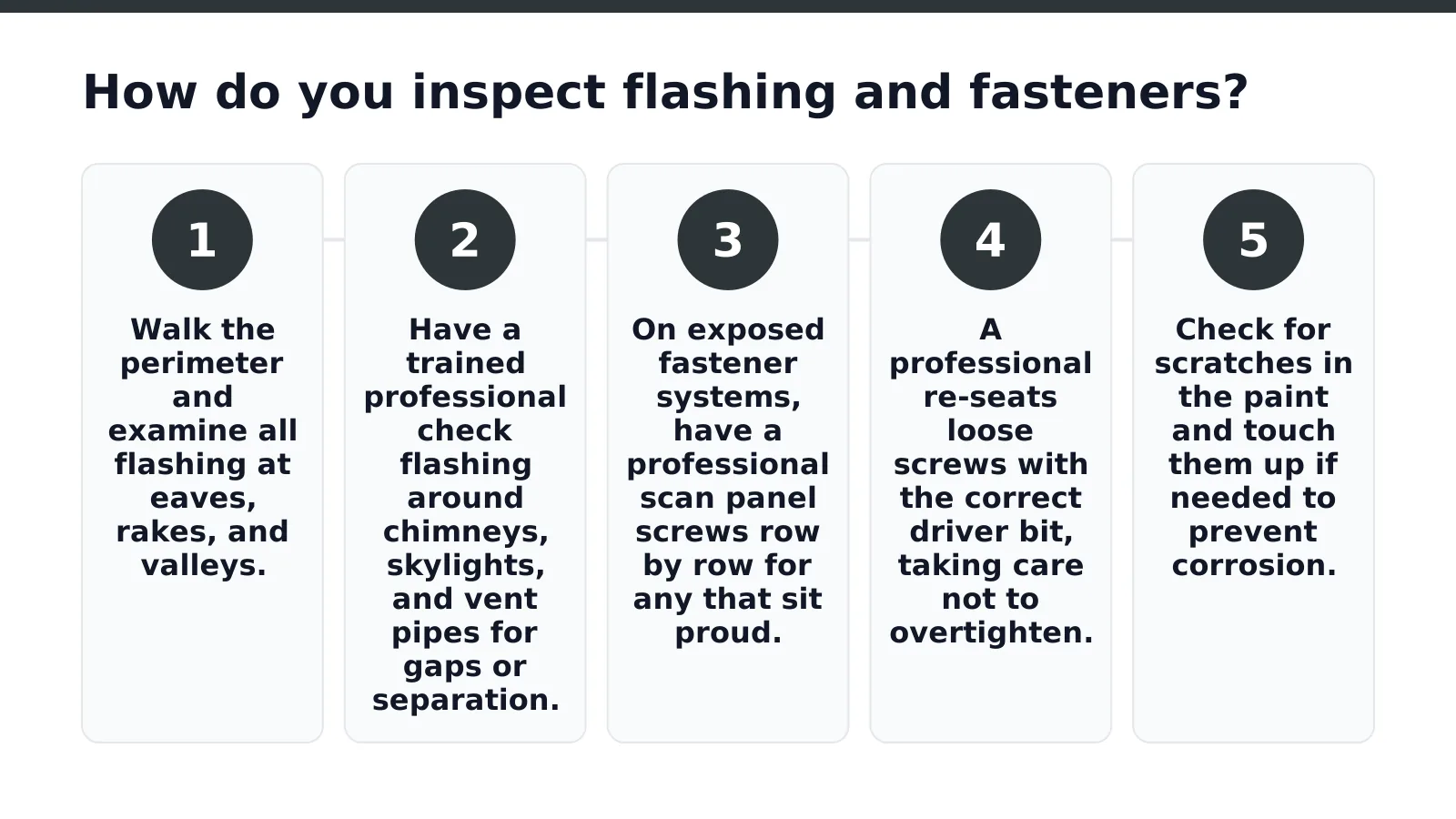
How do you inspect flashing and fasteners?
Flashing and fasteners form the waterproof backbone of any metal roof. A thorough inspection catches small problems before they turn into costly leaks. The process takes about 30 minutes with a trained professional’s ladder and a keen eye.
A roof inspection schedule should include flashing and fastener checks twice each year. Spring and fall inspections work best for Ontario homeowners. These seasonal checks reveal damage from winter ice or summer storms before conditions worsen.
What should homeowners look for when inspecting flashing?
Flashing seals the roof’s edges, valleys, and penetrations like chimneys or vents. Look for signs of damage such as dents, scratches, or loose panels. Bent or lifted flashing allows water to creep underneath, and that moisture damages the roof deck over time. Even small gaps invite trouble during Ontario’s freeze-thaw cycles.
How do fasteners affect a metal roof’s performance?
Fastener condition directly determines how well the roof holds together. On exposed fastener roofs, a professional scans for screws that have backed out and re-seats them. A backed-out screw leaves a direct path for water. Tightening loose fasteners restores the roof’s seal and prevents panel movement during high winds.
The inspection follows a logical sequence. Here is a step-by-step approach:
- Walk the perimeter and examine all flashing at eaves, rakes, and valleys.
- Have a trained professional check flashing around chimneys, skylights, and vent pipes for gaps or separation.
- On exposed fastener systems, have a professional scan panel screws row by row for any that sit proud.
- A professional re-seats loose screws with the correct driver bit, taking care not to overtighten.
- Check for scratches in the paint and touch them up if needed to prevent corrosion.
AWC Metal Roofing installs clean, precise systems backed by industry-leading warranties. Even so, every metal roof benefits from a maintenance plan metal roof owners can follow. Regular attention to flashing and fasteners keeps that warranty protection intact and the roof performing for decades.
What’s the safe way to clean and remove snow?
Safe snow removal from a metal roof starts with the right tools and a gentle approach. Metal panels shed snow efficiently on their own, but when manual clearing becomes necessary, soft-bristle brushes and non-abrasive tools protect the finish from scratches. Debris trapped under snow creates a different problem. Leaves, branches, and accumulated organic material trap moisture against the metal surface, accelerating corrosion in areas already stressed by freeze-thaw cycles.
What tools should never touch a metal roof?
Pressure washers, harsh solvents, and any metallic tool put the roof’s protective coating at risk. A pressure washer forces water under seams and flashings where it does not belong. Metallic shovels and scrapers gouge the paint system, exposing bare steel to the elements. The damage from one wrong tool choice shortens the roof’s service life immediately.
How does a professional handle ice dams?
A preventative roof service addresses ice dam formation before it threatens the structure. Professional crews use low-pressure steam equipment and specialized techniques that clear ice without contacting the metal surface directly. AWC Metal Roofing installs premium metal roof systems built for Ontario weather, and the company’s trained teams understand how snow loads interact with standing seam and exposed fastener profiles. Property owners who attempt ice dam removal with hammers or chisels risk puncturing panels and voiding manufacturer warranties. The safest path is a scheduled roof inspection schedule that catches ice buildup early, paired with a maintenance plan metal roof professionals execute during winter months.
A proper metal roof maintenance program includes seasonal debris clearing as a core component. Removing leaves and branches before the first snowfall prevents the moisture trap that feeds corrosion under snowpack. This simple step, performed twice yearly, forms the foundation of long term roof care that keeps a metal roof performing for decades.
When should you call a professional for long term roof care?
Professional intervention becomes essential the moment an inspection reveals anything beyond surface debris. A long term roof care strategy balances simple homeowner vigilance with expert technical service. Homeowners can safely conduct minor visual checks from the ground, scanning for obvious dents or displaced panels. Climbing onto the roof, however, introduces risk and requires trained personnel. Homeowner DIY steps are strictly limited to ground-level observation.
Complex issues demand a specialist’s eye. Loose flashing, compromised sealants, and hidden moisture damage are not DIY fixes. If damage has occurred, consulting a professional metal roofing contractor determines the next best steps, as noted by Central States Manufacturing. Delaying professional repair turns small problems into structural failures. Water infiltration corrodes decking and destroys insulation long before interior stains appear.
What does a professional metal roof maintenance program include?
A structured metal roof maintenance program from a qualified contractor covers thorough inspections, fastener reseating, and sealant replacement. Trained crews access every roof plane safely and document wear patterns that signal future trouble. This proactive approach prevents the cascade of damage that follows one overlooked penetration.
How often should a roof inspection schedule include a pro visit?
A sound roof inspection schedule pairs biannual homeowner walk-arounds with an annual professional assessment. Spring checks catch winter storm damage. Fall visits prepare the roof for ice and snow loads. AWC Metal Roofing, a trusted local contractor with over 25 years of experience, serves Tillsonburg and surrounding Ontario areas with skilled crews committed to on-time, on-budget work.
Why invest in a maintenance plan metal roof experts design?
A custom maintenance plan metal roof specialists develop extends service life to its full 40 to 70 year potential. The company’s founding principle holds that homeowners deserve roofing that performs through Ontario winters and summer storms. A preventative roof service contract locks in priority scheduling and documented service history. That record proves invaluable for warranty claims and property resale. Without it, owners risk denied coverage and expensive out-of-pocket replacements.
Conclusion
A proper metal roof maintenance schedule keeps your investment performing through Ontario’s toughest weather, and the difference between a roof that lasts decades and one that fails early comes down to consistent care. Pair your own seasonal visual checks with an annual professional inspection, and you catch small issues before they become expensive structural problems. That simple rhythm, spring and fall walk-arounds plus one expert visit each year, protects your warranty and your peace of mind.