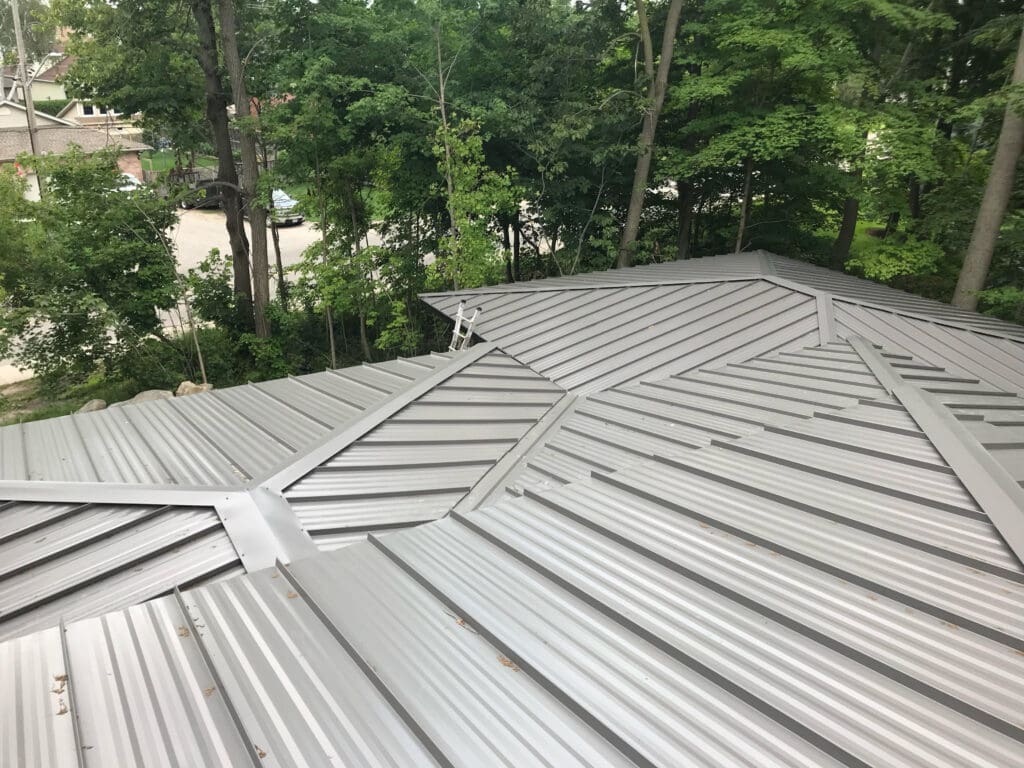
Standing seam metal roof systems use wide, flat panels joined by raised vertical legs, with fasteners hidden beneath the seams. That concealed design delivers a sleek, modern look and reduces leak risk from exposed fixings. AWC Metal Roofing installs standing seam profiles engineered to handle Ontario winters, summer storms, snow, and high winds.
What Is a Standing Seam Metal Roof?
A standing seam metal roof is a roofing system built from wide, flat metal panels with raised vertical legs running along each edge. Those raised seams give the system its name and create the distinctive ridged appearance visible from the ground.
The panels interlock and fasten together at those raised seams. This design makes it a concealed fastener roof, with no screws or fixings exposed on the surface. Sheffield Metals describes standing seam roofs as utilizing a concealed fastener system that provides a modern, sleek appearance and impressive durability. Because the fixings stay hidden, there are fewer penetration points where water can work its way in. Vertix Systems notes that having no visible fixings reduces the risk of leaks from those attachment points, a clear advantage over exposed-fastener metal roofs.
How Does a Standing Seam Roof Differ From Other Metal Roofs?
The defining difference sits in the fastener placement. Exposed-fastener metal roofs have screws driven through the panel face, leaving thousands of holes sealed only by gaskets. A standing seam system moves those fasteners under the raised seam, where they stay dry and protected. This shift eliminates the most common failure point on metal roofs.
Panel profile also sets standing seam apart. The ribs stand taller and the flat sections run wider than corrugated agricultural panels. The result is a cleaner architectural line suited to residential and commercial buildings alike.
When Did Modern Standing Seam Roofing Develop?
Modern standing seam systems took shape in the 1960s, according to Architizer’s architectural guide. Builders began using metal panels to replace traditional materials like asphalt, tile, or slate. The shift brought longer service life and different aesthetic possibilities to sloped roofing.
AWC Metal Roofing installs standing seam as its high-end metal roof profile, offering it alongside more economical options like Tuff Rib. The company serves Tillsonburg and surrounding Ontario areas with standing seam metal roofing engineered for the region’s weather extremes. Ontario homeowners evaluating modern metal roofing often weigh the standing seam installation benefits against upfront cost. The concealed fastener design, reduced leak risk, and clean visual profile make standing seam a benchmark in premium roof systems.
How Do Concealed Fasteners Actually Work?
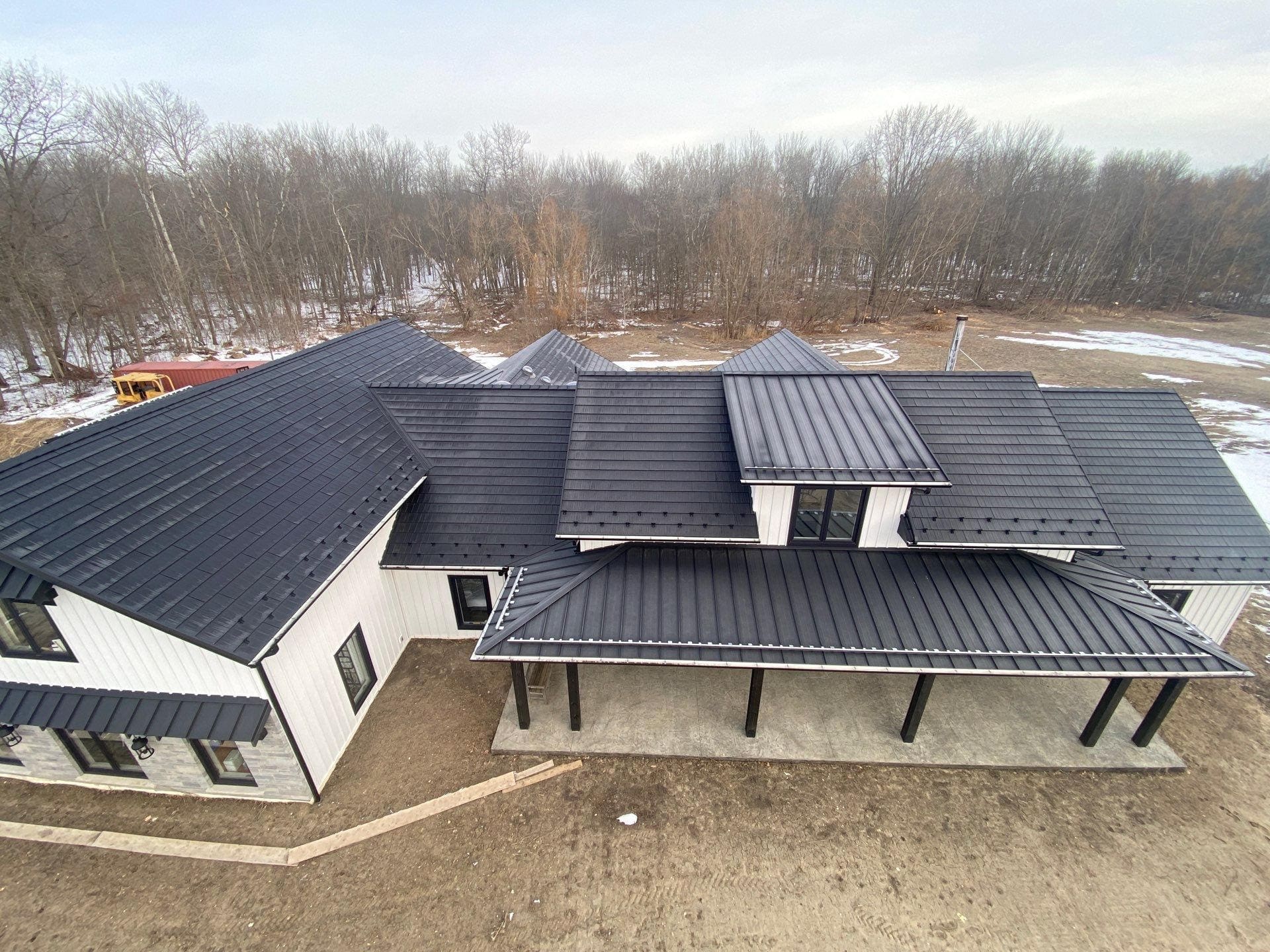
A concealed fastener roof hides every screw and clip beneath the metal surface. The panels connect through interlocking seams rather than screws driven through the face of the metal, so the surface stays clean and uninterrupted. This design eliminates the exposed fastener holes that eventually leak on conventional metal roofs.
The mechanism is straightforward. Each panel has a raised vertical leg on one edge. The next panel’s leg locks over it, creating a watertight seam that rises above the roof’s flat drainage plane. Water runs off the panels without ever touching a fastener.
What Are the Two Main Types of Standing Seam Systems?
There are two main families of standing seam metal roof systems. Snap-together panels lock with a secure interlocking design that clicks into place during installation. Mechanically seamed panels require a crimping tool that folds the seam tight against the panel leg. Both approaches keep fasteners hidden, but mechanically seamed systems create a stronger bond for low-slope applications.
How Do Structural and Fully Supported Systems Differ?
Some standing seam systems are fully supported over solid decking, meaning the panels rest directly on plywood or insulation board. Others are self-supporting structural panels that span between supports without continuous decking underneath. The structural approach suits open-framed buildings and agricultural structures. Fully supported systems work well for residential homes where solid decking already exists.
AWC Metal Roofing’s crews handle clean, precise installations backed by industry-leading warranties, with no hidden fees. The company serves Tillsonburg and surrounding Ontario areas, where concealed fastener systems must withstand heavy snow loads and freeze-thaw cycles. Every metal roof profile in the standing seam category shares this core advantage: no exposed screws means no entry points for moisture.
Which Metal Roof Profile Fits Your Home?
A metal roof profile defines the shape, seam height, and fastening method of the panels. The right profile balances weather protection, architectural style, and budget. Ontario homeowners who overlook profile selection risk water intrusion and premature panel wear, especially through freeze-thaw cycles and wind-driven rain.
What types of metal roof profiles are available?
Metal roofing spans far more than a single panel style. The category includes metal shingles, tiles, exposed-fastener panels common on agricultural buildings, and standing seam metal roof systems. Each profile serves different structural and visual goals. Exposed-fastener panels suit utilitarian structures. Standing seam panels deliver a sleek, uninterrupted look for residential and commercial projects.
How does a concealed fastener roof improve performance?
A concealed fastener roof hides all screws and clips beneath the panel surface. This design eliminates thousands of potential leak points. Standing seam systems use this approach, relying on interlocking panels and hidden clips that allow the metal to expand and contract freely. The result is a weathertight assembly that resists corrosion and fastener back-out over decades of service.
What seam heights and materials define modern metal roofing?
Modern metal roofing offers seam heights from a low-profile one-inch rib to taller architectural panels with crisp, defined lines. Taller seams suit custom homes and commercial buildings where visual impact matters. Material choice further shapes performance. Sheffield Metals notes that standing seam panels come in aluminium, copper, and aluminium-zinc alloy coated steel. Each material brings distinct colour retention, corrosion resistance, and weight characteristics.
How do metal shingles compare to standing seam?
AWC Metal Roofing supplies both standing seam and metal shingle profiles. Metal shingles replicate the look of traditional slate or shake while using concealed fasteners and 28-gauge steel for durability. Standing seam panels create a bolder, contemporary aesthetic with uninterrupted vertical lines. The choice hinges on architectural character. A heritage-style home often benefits from shingle profiles. A modern build or rural property gains definition from standing seam’s clean geometry. AWC Metal Roofing also provides metal siding, allowing walls and roof to share a cohesive material language across the entire exterior.
Why Does Standing Seam Handle Ontario Weather?
A standing seam metal roof handles Ontario weather through a concealed fastener design that removes the most common leak point. The raised seams interlock panels while keeping every screw and clip hidden from rain, snow, and ice. This structural choice matters more than material thickness alone.
Ontario homeowners face a punishing cycle. Heavy rain soaks the roof in spring and fall. High winds drive moisture sideways. Winter piles snow onto the surface for months. Intense summer sun bakes the metal through repeated thermal cycles. AWC Metal Roofing engineers its products specifically for these conditions, covering heavy rain, high winds, snow, and intense sun in one system.
How Does the Concealed Fastener System Prevent Leaks?
A concealed fastener roof eliminates exposed screws, which are the first failure point on conventional metal roofs. Standing seam panels feature flat surfaces with raised vertical legs that connect together. No fixings sit in the weather. This design reduces the risk of leaks from fasteners, a problem that plagues exposed fastener systems after repeated freeze-thaw cycles.
What Makes the Metal Roof Profile Suited to Snow and Wind?
The metal roof profile on standing seam systems uses taller ribs and interlocking sheets. Snow slides off the smooth vertical surface instead of accumulating in crevices. Wind lifts flat shingles, but the continuous panel runs resist uplift. AWC Metal Roofing offers durable and energy-efficient solutions that outperform traditional shingles across Ontario’s extreme climates.
Modern metal roofing lasts between 40 and 70 years, significantly outlasting asphalt shingles. That longevity comes from the standing seam installation benefits: hidden fasteners, interlocking panels, and a profile engineered for thermal movement. Ontario’s weather does not forgive shortcuts. The concealed fastener approach removes the weak points that weather exploits.
What Are the Long-Term Benefits of Standing Seam?
A standing seam metal roof delivers decades of reliable protection with minimal upkeep. Property owners across Ontario gain a roofing system that combines structural resilience, modern aesthetics, and measurable energy savings.
Longevity stands as the primary advantage. A properly installed standing seam roof serves as a long-lasting alternative to traditional roofing materials, according to Vertix Systems. The panels resist cracking, warping, and corrosion far longer than asphalt shingles. This durability translates directly into fewer replacements over a building’s lifetime.
What makes a standing seam roof last so long?
The concealed fastener roof design keeps all hardware hidden beneath the metal surface. Fasteners never face direct exposure to rain, snow, or UV radiation. That simple engineering choice eliminates the most common failure point found in exposed-fastener systems. Panels also expand and contract freely with temperature swings, preventing stress fractures.
How does a standing seam roof improve energy efficiency?
A modern metal roofing system reflects solar heat rather than absorbing it. This reduces attic temperatures during Ontario summers and lowers cooling costs. Many metal roof profile options also accommodate above-sheathing ventilation, creating a thermal break that boosts winter performance.
The aesthetic payoff matters too. Clean vertical lines and wide flat panels give any structure a crisp, contemporary look. Sheffield Metals notes that standing seam continues growing in popularity as property owners seek products that last, look modern, and protect the structure.
Standing seam installation benefits extend beyond the roof itself. Skilled crews complete projects on time and on budget, minimizing disruption to daily routines. The result is a weather-tight assembly backed by industry-leading warranties and built for Ontario’s harshest conditions.
Conclusion
Standing seam metal roofing delivers a concealed fastener design that eliminates leak points, handles Ontario’s freeze-thaw cycle, and lasts decades with minimal upkeep. You now have the facts to weigh this system against other profiles. The next step is matching the roof to your building’s character and your long-term priorities.